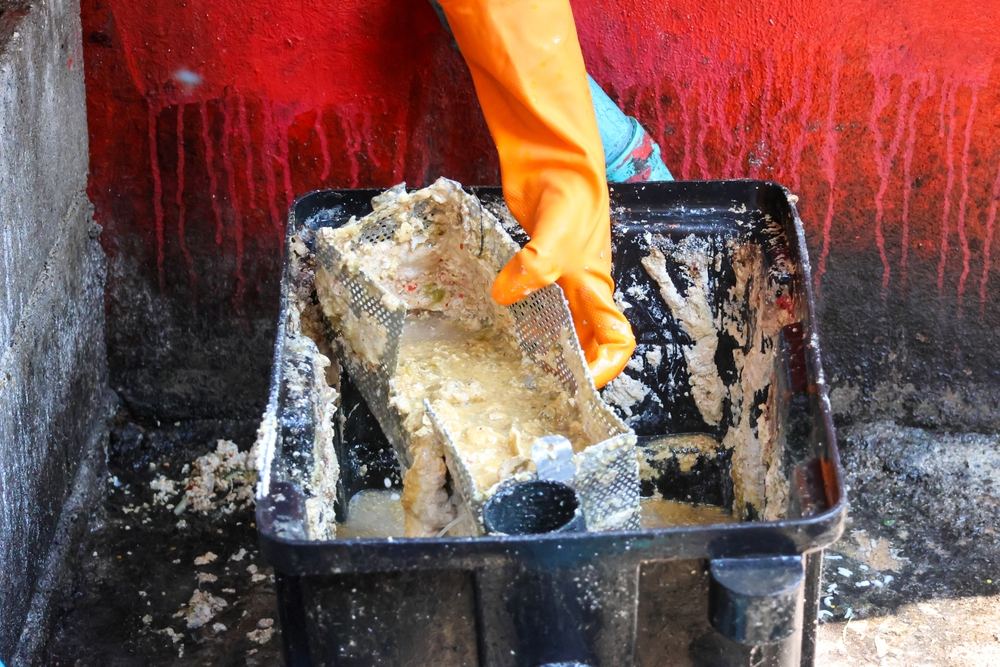
Grease Trap Cleaning Country Club Hills IL
Strip centers along Cicero Avenue keep calling for Grease Trap Cleaning Country Club Hills IL tenants and landlords can share without arguing about who filled the unit. We pump shared and single-tenant interceptors completely, scrape them clean and leave a record that splits easily across a lease.
Country Club Hills is a city of about 16,000 people on the west side of Interstate 57. Its dining scene is spread across strip plazas rather than a downtown, which gives the city a high share of multi-tenant buildings tied to one outdoor interceptor.
How a shared plaza interceptor is serviced in Country Club Hills
Plaza jobs start with the property manager, who confirms the date and lets tenants know a truck will be in the lot. On the day, cones mark off the lid and the hose route so the fire lane stays clear. The technician measures the grease and solids layers, and on request opens individual tenant traps to see who is contributing most. The shared tank is pumped, scraped and refilled, and one record goes to the manager to share with every tenant on the line.
MWRD and the city's rules for Country Club Hills plazas
Flow from Country Club Hills enters the MWRD system, whose Sewage and Waste Control Ordinance prohibits wastes that obstruct sewers or upset treatment. The city maintains the local sewers connecting businesses to MWRD interceptors, and city crews are the first to see grease buildup at manholes downstream of busy plazas.
New or remodeled kitchens must meet the Illinois Plumbing Code for interceptor sizing, and the Cook County Department of Public Health inspects food establishments. When a plaza interceptor serves several tenants, inspectors and city staff tend to deal with the property owner, so landlords benefit most from a reliable record of every visit.
Cicero Avenue, the I-57 interchange and 183rd Street
Cicero Avenue (Illinois Route 50) carries most of the city's restaurants: chicken and seafood counters, Caribbean and soul food kitchens, pizza, chain burgers and sit-down family spots. Around the 167th Street interchange with Interstate 57, hotels with breakfast rooms and fast-food chains serve highway traffic.
Further south, 183rd Street adds banquet halls and party venues that host weekend receptions. Hillcrest High School and the city's elementary schools run cafeterias on the academic calendar, and several large churches operate full kitchens. Each of these fills a trap differently, so plaza schedules work best when the heaviest tenant sets the pace.
Landlords who book grease trap cleaning on a fixed calendar for the whole plaza usually see fewer tenant complaints and fewer emergency calls than those who wait for a backup.
Shared lots, long hose runs and plowed-over lids
A typical plaza interceptor sits in the parking lot behind the stores, sometimes 50 feet or more from the tenant using it most. We bring enough hose to reach without blocking fire lanes and coordinate with property managers so the lot stays open during service.
Winter plowing piles snow at the edges of these lots, often right on top of the lid. Freeze-thaw cycles also lift risers and crack the concrete collars around them. We report damage on the service record so the landlord can fix it before spring rains add groundwater to the tank.
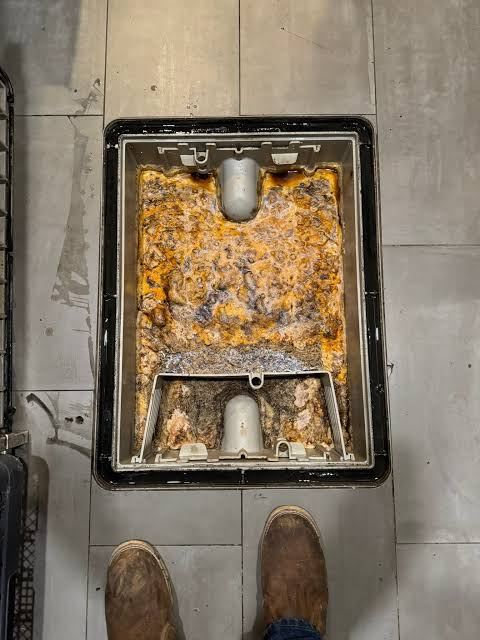
Grease Trap Pumping in Country Club Hills
Small cafes inside Country Club Hills plazas often run 20 to 35 gallon traps under the three-compartment sink. These fill steadily, and pumping them on a monthly or bi-monthly schedule keeps grease from spreading into the shared line that feeds the larger outdoor unit.
Grease Interceptor Cleaning in Country Club Hills
For multi-tenant interceptors, cleaning includes scraping every baffle, clearing both tees and inspecting the sample point. A clean unit is easier to measure, which makes it easier to prove each tenant's impact when a landlord allocates costs.
Grease Interceptor Pumping in Country Club Hills
Shared plaza interceptors along Cicero Avenue commonly hold 1,000 to 2,000 gallons. We vacuum the whole tank, log gallons removed and layer depths, and can send the record to both the property manager and each tenant who requests it.
Country Club Hills on the map
Country Club Hills sits along Cicero Avenue and Interstate 57, between Oak Forest to the north and Matteson to the south.
Questions from Country Club Hills landlords and tenants
Who pays for cleaning a shared interceptor in a Country Club Hills plaza?
That depends on your lease. Many landlords pay for the service and pass the cost through common area charges. We provide a single record for the unit, and the property manager can share it with tenants.
Can you tell which tenant is putting the most grease into a shared unit?
Not with certainty from the tank alone, but we can inspect individual tenant traps and lines. A tenant whose own trap fills fast is usually also the main source for the shared interceptor.
Do hotels near the I-57 interchange need regular grease trap service?
Yes. Breakfast rooms that cook eggs, sausage and waffles produce more grease than owners expect. Most hotel kitchens do well on a quarterly visit, with an extra one during busy travel months.
My banquet hall on 183rd Street only gets busy on weekends. When should I book?
Monday or Tuesday after a heavy weekend is ideal. That way the unit is empty when the next reception begins, and staff are not working around a truck on a busy setup day.
What does a cracked interceptor collar mean for my business?
A cracked collar lets surface water into the tank and can loosen the lid. Water dilutes the grease layer and pushes it toward the outlet. We note the crack so you or your landlord can arrange a repair.
Can my Country Club Hills school cafeteria skip service over summer?
Often yes, if the kitchen is closed. We usually recommend a cleanout just before break and another before classes resume so stale grease does not sit in the tank all summer.
How far can your hose reach from the truck?
Our crews carry enough hose for most plaza layouts, including interceptors well behind the building. If the lid is unusually far from any truck access point, tell us when you call so we can plan.
Does Country Club Hills require a grease trap for a takeout-only restaurant?
If the kitchen cooks food and washes dishes on site, plumbing rules generally require grease interception on the fixtures handling greasy water. Takeout service does not change that requirement.
Why are there flies near my outdoor interceptor in summer?
Flies are drawn to decomposing grease and food solids, especially when a lid gasket is cracked or missing. Pumping the tank and fixing the gasket usually solves the problem quickly.
What is the difference between a grease trap and a grease interceptor?
The terms overlap. In everyday use, a trap is a smaller indoor unit near the sink, while an interceptor is a larger in-ground tank outside. Both separate fats, oils and grease from wastewater.
Can grease from my plaza unit cause backups in other stores?
Yes. In shared systems, a blocked outlet or line can back water into the lowest drain on the line, which is not always the kitchen that caused it. Regular service protects every tenant.
Do Caribbean and soul food kitchens need more frequent service?
Kitchens that fry often or cook with heavy oils and rendered fats tend to fill traps faster. We base the schedule on what we measure, but monthly service is common for high-volume fryers.
Neighboring cities near Country Club Hills
Kitchens close to Country Club Hills are on the same service routes: